Showing posts with label International Space. Show all posts

Sunday, April 7, 2019

International Day of Human Spaceflight 2019

Vostok-1 Display.

This Friday, April 12, is the International Day of Human Spaceflight, also known as Yuri's Night. It commemorates the launch of Yuri Gagarin, the first man in space, on mission Vostok-1 in 1961. The purpose of this celebration, held around the world, is to help promote space exploration. In the past I have often missed participating in this celebration because I get too busy and the day kind of sneaks up on you and then - Woosh! - it's gone and I look forward to the next year.

I am unaware of any special parties or events at the Clarke Planetarium, but they do have some great planetarium and IMAX theater shows on space exploration. If you haven't got anything planned and want to join in the fun, take in a show. 

As for myself, I am going to celebrate in my own way - playing space games! I will be at GAJO Games in Sandy, Utah at 6 pm to play the new GMT game SPACECORP - the exploration of the Solar System. SpaceCorp is about developing a space exploration corporation, and reaching out to establish new bases and technology in our solar system and beyond. It includes several layers of games. You start by exploring the inner system, the LaGrange points, the Moon, and the first bases on Mars. Then you move into developing the technology and human presence in the farther reaches of the Gas Giants and the outer solar system. Finally you push to be the first explorers to reach out to the nearest stars.

Box cover art for SpaceCorp.


Game Board for the first phase of space conquest.

What else could you do? How about watch a movie or read a book on spaceflight. Or build a spaceship model. You could build a LEGO spacecraft. (I've started getting some LEGO astronaut figures, and there's a large Saturn-V kit awaiting my attention).  Better yet, if the night weather is good and the sky is mostly clear, grab the binoculars, or if you have one, a telescope, and spend some time stargazing at the real space right above us.

Whatever you choose, have a happy Yuri's Night and celebrate the incredible adventure of space exploration!

Sunday, December 25, 2016

Expedition 50 Celebrates Christmas in Space

Merry Christmas from the crew of Expedition 50 on board the International Space Station. Hope Santa has boosters to reach that high up in orbit.

The crew of the ISS is celebrating Christmas with light duties today, and getting some precious personal time. They'll be working on spacesuits tomorrow, in preparation for an upcoming EVA.
Japan's HTV-6 robotic cargo supply spacecraft is grappled by the CanadArm robotic arm under control of astronauts in the station.

Earlier this month, on December 13, the ISS received a new arrival in the form of a Japanese cargo spacecraft, operated by remote control, carrying supplies and experiments to the Expedition 50 crew. The HTV-6 blasted off from Tanegashima, and island off Japan, on December 9 and arrived on the 13th. One of the experiments on board is the KITE - Kounatori Integrated Tether Experiment - an electrodynamic tether which will eventually be developed to help remove space debris in the future.
About 8,000 pounds of equipment, fuel, batteries, supplies and hardware were brought to the station.
The HTV-6 was docked to the station's Harmony module, and is currently one of 4 vehicles docked to the station.

Currently occupied Docking Ports.

This is the sixth spacecraft of the current HTV design from Japan. There are planned to be three more launches of the current design. Engineers are designing the next generation HTV, designated HTV-X, which will use a service module for propulsion and allow for more cargo to be delivered. That launch is expected in 2021.

Saturday, December 3, 2016

Two Re-entries: One Good, One Bad.

A Cygnus resupply vehicle grappled with the ISS robotic CanadArm.
 
There have been two fiery re-entries in the ISS program lately. One went well, the other did not. On November 27, the Cygnus OA-5 cargo spacecraft re-entered the atmosphere and burned up (along with a lot of space station trash) over the Pacific Ocean. On its way out, it performed some vital services. After undocking from the ISS to make room for future cargo deliveries, the Cygnus performed a test of the fire system aboard the spacecraft, with the goal to observe how fires behave in a zero0G environment. After the succesfull test, ground engineers operated the ship to a new high altitude Cygnus record of 500 kilometers, and then launched a series of four LEMUR cubesats. Two days llater the engineers guided Cygnus to its end.
Fiery breakup of an earlier Cygnus mission.
 
Night launch of a Progress supply mission.
 
Things did NOT go as planned for a Russian resupply mission to the ISS station. On Thursday December 3, Progress MS-04 blasted off from Baikonur with supplies for the astronauts in ISS. It was the 4th use of the revamped Progress series of robotic cargo ships. As engineers are still verifyiing safety tests with the new Progress and Soyuz variations, the plan was to continue using the 2-day orbital approach technique to the station rendezvous. Something went wrong during the third stage separation. Observers noted the fiery re-entry and crash over southern Russia. This marks the 3rd Progress failure in 65 launches.
 

Wednesday, February 17, 2016

50 Years Ago: Luna 9 on the Moon

Soviet Luna IX Lunar Probe.

This February marks the 50th anniversary of a great achievement for Soviet Russia's moon program. Back on February 3, 1966, the Russians successfully directed the Luna IX Moon Probe towards the lunar surface. The Molniya-M rocket carrying the probe left Earth on January 31. Using nitrogen-powered thrusters, the spacecraft commenced spinning for thermal control, and the fourth stage propelled the craft into a lunar interception orbit.
Lander segment process art.

At 16 miles from the surface, the craft began retro-rocket firings to slow its descent. When the probe reached 16 feet above the surface the lander capsule was ejected, and when on the surface it deployed its landing petals for orientation and began taking pictures.
One of the first images from the surface of the Moon.

The lander began sending the images back to Earth about 7 hours later. Interestingly, the Soviets delayed releasing the images, but meanwhile in England, scientists at the Jodrell Observatory where able to print the images and get them to the papers. There is some speculation that the inclusion of standard press-type Radiofax imagers on the probe may have been intended to help the Observatory prepare the images for release anyway.

Wednesday, December 23, 2015

Russian Cargo Ship Reaches ISS

The Progress cargo ship looks very much like a manned Soyuz spacecraft. This one is Progress M-27M.
 
Taking off from Baikonur on Monday, the Progress 62 robotic cargo ship entered Earth orbit and began a two-day flight to the International Space Station. Rather than follow the now-typical 6 hour short cut rendezvous flight to the ISS, ground controllers guided the ship into the longer flight to make room for Monday's unplanned EVA by NASA astronauts to move the Mobile Transport cart to a safe location on the truss.

Progress 62 indicated two new mission equipment upgrades. The Progress ship is the first of a new MS series of supply ships, that include en external compartment for launching micro satellites, and an improved system for protection from micro-meteoroids and debris strikes. The Russian (Roscosmos) designation for this mission is Progress MS431.

Soyuz 2-1A rocket booster. Credit Roscosmos.
 
The second upgrade is in the rocket itself. It can get confusing when the manned spacecraft is named Soyuz, but so too is the rocket. In this case the mission launched atop  a Soyuz 2-1A rocket. First flown in 2004, it was designed to eventually replace all rockets used for manned and unmanned missions flown by previous Soyuz and Molniya variants. It has been used for manned Soyuz missions so far, but is now being used by Progress missions.

Wednesday, April 1, 2015

One Week, Eight Rockets!

Delta IV launches from Cape Canaveral. NASA/ULA.

In one week, all the major space-faring nations managed to launch payloads into Earth orbit. It started off on March 25th with the United Launch Alliance (US) conducting the launch of a Delta IV rocket from Florida's Cape Canaveral Launch Complex 37B. On board was the GPS-IIF-9 navigational satellite. From that point, the blast-offs just kept on coming.

On Thursday, a Russian Dnepr rocket lifted off from Dombarovsky in South-west Russia near Kazakhstan. It carried a Kompsat-3A research satellite for the South Korean Research Institute. The Dnepr is a repurposed ICBM missile.

On Friday, Japan launched an H-IIA rocket from the Tanegashima Space Center. It placed an information-gathering satellite into orbit.

On Friday night, Soyuz TMA-16M lifted off from the Baikonur astrodome with crewmembers for Expedition 43 on the International SPace Station. Inside the SOyuz capsule, the picture caught astronaut Scott Kelly giving a thumbs-up as the spacecraft heads towards a rendezvous. Six hours later the spacecraft arrived safely. Kelly and cosmonaut Mikhail Kornienko will be staying on board the station for an entire year, studying the effects of long-duration spaceflight. The commander of the Soyuz mission was Gennady Pedalka, making a return to the space station. He will be the first commander of four separate crews on the ISS.

Also on Friday, European agency Arianespace conducted a launch from French Guiana, firing a Soyuz rocket carrying twin Galileo satellites as part of the GNSS Navigation System.

On Saturday, a launch occurred at India's Satish Dhawan Space Center in India. The satellite is another navigation link in the Indian Regional Navigation Satellite System.

The next launch took place on Monday, when China launched a Long March 3C to place a first in a new series of navigational satellites in orbit.

Back to Russia. From the Plestsk space center, Russia launched 3 Gonets-M communication satellites into orbit on board a Rokot missile. It is speculated that a 4th satellite, a secret military craft, was launched from the same flight.

Space activities have been very busy lately!


Wednesday, February 18, 2015

Departures and Arrivals at the ISS

ATV-5 firing thrusters for maneuvering. 

The International Space Station has seen a flurry of cargo spaceships coming and going in the last week. On February 14th, the Georges LemaƮtre (ATV-5) undocked from the ISS and prepared for a fiery re-entry through the Earth's atmosphere on Sunday. This had been the 5th robotic European cargo spaceship to service the station, arriving in August 2014. Delivering over 2,600 kg of cargo, supplies, and propellant to the station, it had also been the heaviest spacecraft to fly into orbit with the Ariane rocket. DUring its stay at the station, it had activated its motors in November to push the ISS out of the way of a dangerous piece of debris (possibly from a Chinese space experiment). With its supplies removed, the spacious cargo area was filled with trash, broken items, and waste for burn up with the craft on Sunday.

Progress spacecraft head-on view. Solar panels extend to the sides, and communications and ranging equipment sticks out from the hull.

Progress 58, designated by the Russians as M-26M, blasted off on a SOyuz rocket from the Baikonur Cosmodrome on Tuesday the 18th. Following a six-hour rapid ascent trajectory, the spacecraft rendezvoused with the station and docked at the Zvesda module a short time later. Docking took place at the same port just recently vacated by the ATV-5. Progress brings up about 2,300 kg of supplies, including water essential for the life support and running of the station. Expedition 42 crew members will begin unloading the spacecraft once atmosphere pressures and spacecraft systems have been checked out and normalized.

View of ISS from Progress spacecraft.

Progress 58 spotted from the ISS as it approached the station from below.

Friday, March 28, 2014

Soyuz Arrives Late but Safe to ISS

Soyuz TMA-12M on approach to ISS.

The second half of Expedition 39 arrived at the International Space Station yesterday, a little late from having to endure the two day voyage instead of the planned six hour shortcut. A missed thruster firing had resulted Tuesday when the spacecraft computers deemed the craft was out of correct position.

The crew of TMA-12M. L to R: astronaut Steve Swanson, Soyuz Commander cosmonaut Alexander Skvortsov, cosmonaut Oleg Artemyev.

Automatic computer maneuvering docked the Soyuz spacecraft at a few minutes shy of 6 pm MDT. The Soyuz is docked to the Russian-built Polsk docking compartment. After equalizing air pressures and docking safety checks, the crew opened the hatches at 8:35 MDT and the crew escaped the cramped confines of the Soyuz capsule to enter the wide open spaces of the ISS. After a welcoming ceremony, the crew was given a safety tour of the station. The entire crew will have Friday "off" as the new crew accommodates to the new routines.

Broadcast of the Welcome ceremony. The new crewmembers are in front. In back are (L-R) Station Commander Koichi Wakat of Japan, Flight Engineer Rick Mastracchio, and Roscosmos cosmonaut Mikhail Tyurin of Russia.


Monday, December 2, 2013

Progress 35 Docks to ISS after Glitch


Progress Capsule on approach to ISS, from a previous mission.

On late Friday November 30, the Progress M-21M (NASA designation Progress 53) robotic space cargo delivery spacecraft was finally docked to the Russian-built Zvesda module on the ISS. After it first reached rendezvous with the station, ground controllers had the ship perform a 1-mile flyby of the station to check out the Kurs automated docking system. All systems seemed ready, and the approach was initiated, but the craft suddenly went into station-keeping mode about 60 meters from the docking port.


Expedition 38 commander Oleg Kotov practicing the maneuvers for manual docking of a Progress vehicle. This practice would come in handy just a couple of days later.

Not to worry: Oleg was there. Oleg Kotov is the Expedition 38 commander, having recently taken command from Expedition 37 commander Fyodor Yurchikhin just last month. Just as recently as Nov. 22nd, he and fellow cosmonaut Mikhail Tyurin practiced the techniques required to manually dock the Progress in case of a system glitch. Manually in this case means, remote-control from the station, as opposed to allowing the Progress auto-docking Kurs system to perfrom the maneuvers under supervision from Ground COntrollers. On Friday, Commander Kotov took to the laptop-controlled ISS system to pass radio controls to the Progress 53 craft, and docking was completed successfully. 


Progress capsules are launched on the Soyuz family of rockets.

This Progress mission lifted off from Baikonur on Monday November 25, and took the normally longer orbital route to the station in order to test upgrades to the automated systems. It carries about 3 tons of neeeded supplies to the station, including water, propellant, atmosphere, and parts. The docking hatches were opened Saturday and the crew will take out supplies as schedule permits. Eventually the capsule will be filled with disposables and trash and then burned up over the ocean next year.

Sunday, December 1, 2013

International Push to the Planets

India's Mangalyaan Mars mission lifts off from Sriharikota.

India and China have set their sights on missions to far off worlds. On November 5, the Indian Space Research Organization (ISRO) launched a PSLV-C25 rocket carrying the Mangalyaan mission on its way to the Red Planet. Without many of the resources the US includes in NASA, India is trying to achieve it's mission at a very low cost - only about $73 million. After six orbits of the Earth, the craft launched itself on a slingshot orbit around the Sun (to gain speed from the gravity assist). The MOM (Mars Orbiter Mission) is expected to arrive at Mars next September, and the challenge will be to get the craft into Mars' orbit. After arriving, it will makes studies of the ground composition and analyze elements of the atmosphere.

Long March 3B liftoff from Xichang launch facilities in Sichuan. Xinhua credit.

Early Sunday morning China sent its Yutu rover on its way to the Moon atop a Long March rocket. Lifting off from Sichuan, China, the Long March successfully placed the lunar craft on a trajectory to the Moon. Solar panels have deployed and are powering the spacecraft during its journey. The robotic rover, Yutu, has a plutonium-powered motor for its exploration of the lunar surface. The attempt to land the rover on its surface-lander craft will be made on December 14. If all goes well, it should arrive in the Bay of Rainbows (Sinus Iridum) and begin exploring shortly after. The Chang'e 3 mission is a testbed of topographic recognition systems, chemical analysis, and lunar dust radar penetrator instruments. By 202, China hopes to launch a sample-return mission.

China's Yutu lunar rover. AFP credit.

Monday, November 11, 2013

Olympic Torch part of ISS History

The new Olympic Torch . TMA-11M crew. NASA Credit.
Expedition 38 Crewmembers (L-R): FLight Engineer Koichi Wakata (Japan), Soyuz Commander Mikhail Tyurin (Russia), Flight Engineer Rick Mastracchio (USA).

In preparation for the Summer Olympic games of 2014, to be held in Russia, The Russian SPace Agency has sent a famous piece of equipment into space. The Olympic Torch, which will ignite the fires at the Games in 2014, accompanied the crew of Soyuz TMA-11M to the ISS for a magic moment.

Cosmonaut Oleg Kotov holds up the Olympic Torch during Saturday's Spacewalk.

On Saturday, cosmonauts Oleg Kotov and Sergei Ryazanskiy performed a 5-hour EVA to complete some maintenance items outside the stage. They also took the Olympic Torch outside into space for a brief ceremony outside the Russian-built Pirs module. Once completed, they placed the torch back into the airlock and began to work on the maintenance tasks. The 8th spacewalk of the year, this was the 4th EVA for Kotov and the first for Ryazanskiy. It was the 178th EVA performed on the station.

After completion of the spacewalk, the torch was placed in the Soyuz TMA-09M which would bring the torch back to Earth on the weekend.

Tuesday, October 29, 2013

ATV-4 undocks from ISS

ISS docking port view of the ATV-4 slowly backing away from the station. Credit: NASA TV.

The European Space Agency ATV-4 "Albert Einstein" has completed its mission to deliver supplies to the International Space Station. Early Monday morning astronauts of the Expedition 37 team were on standby as mission controllers from the ground operated the spacecraft undocking.  The craft had arrived on June 15 bringing a total of 7 tons' worth of food, fuel, and life support supplies to the ISS. Now filled with garbage, it will be slowly moved away from the station until Saturday. Then, mission controllers in Europe will fire the engine and direct the craft to a fiery re-entry over the Pacific Ocean.

For Expedition 37, this is a busy time of spacecraft shuffle. The Cygnus cargo ship was undocked last week, the ATV-4 removed this week, and next the astronauts will move the Soyuz TMA-09M spacecraft to a new port on the Zvesda module on Friday. This will clear the way for the arrival of Soyuz TMA-11M with three new crewmen on November 7. Following that arrival, crewmembers Yurchikhin, Nyberg and Parmitano will depart on Soyuz TMA-09M on November 10, ending Expedition 37.

Usually NASA posts high-resolution pictures of the comings-and-goings of spacecraft, but I haven't seen them post the pics from the ATV-4 undocking yet. I'll keep an eye out for that.

Tuesday, September 3, 2013

Rocket launch updates

Long March 4C rocket blasts off from Jiuquan, China.

The last couple of weeks have seen the usual flurry of rocket launches from around the world. These satellite launches rarely make TV coverage, but are an important sign of the strength of space programs around the world. They demonstrate how reliant we are upon the space technology that lies behind our way of life in the 21st century.

Launch of  a Long March rocket from Jiuquan.

Yesterday China launched a Long MArch 4C rocket from its Jiuquan Satellite launch center. Three satellites, expected to be secret spy satellites, were placed into orbit.  The Jiquan Center is the same facility from where the Chinese Manned Missions take place. NASA Spaceflight.com has a great article on this launch at : http://www.nasaspaceflight.com/2013/09/long-march-4c-launches-yg17-mission/

Russian Zenit S2B rocket. Credit: Ria Novosti.

On Sunday September 1st, the Russian Zenit rocket returned to duty, placing an Israeli communications satellite into space. This rocket is the land-based version of the Zenit Sea-launched version. The last Zenit launch from its sea-based space center failed, destroying an Intelsat satellite. This launch took place from Baikonur launch facility in Kazakhstan.

The heavy-lift Ariane 5 blasts off. Credit: Ariannespace.

Last Thursday the European Space Agency launched an Ariane 5  heavy lift rocket from its space center in French Guiana on the coast of South America. The two satellites were successfully placed into orbit. One was a European communications satellite, the other a military satellite for India.

The powerful Delta-4 rocket on the pad at Vandenberg AFB, California. 
Credit: ULA & Spaceflight Now.

Last Wednesday morning saw the launch of the Delta-4 rocket under the direction of the United Launch Alliance. Launch site was the Vandenberg Air Force Base pad in California. The mission placed a National Reconnaissance spy satellite into space. 

Japanese Epsilon rocket on the pad at Uchinoura facility. Credit: JAXA.

Things didn't work out very well for the expected launch of the Japanese Epsilon rocket on August 27. The Epsilon is a new rocket, expected to place the SPRINT-A satellite into orbit. The SPRINT-A is an observatory which will study the planets in our solar system. An unexpected malfunction caused the countdown to terminate with 19 seconds left. Engineers are working on the problem. Keep an eye on Space.Com for updates: http://www.space.com/22540-japan-aborts-epsilon-rocket-launch.html

Saturday, August 3, 2013

Russians, Japanese keeping Expedition 36 Supplied

Japan's H-2 rocket stands on Pad 2 at Tanegashima.

These are busy times for space enthusiasts, even without an American manned spacecraft of their own. Not only are rockets launching around the world to place satellites in orbit, rockets are also launching to keep our only manned outpost in space supplied with food and equipment.  This afternoon, Japan's Space Agency launched an H-2 heavy rocket from Pad 2 of the Yoshinobu Complex on Tanegashima Island. Lifted into space was the HTV-4 (H-2 Transfer Vehicle #4) carrying 3.6 tons of supplies and equipment on course to rendezvous with the ISS next Friday.

H-2 liftoff from Pad 2.  HTV-4 coverage by JAXA and seen on SpaceflightNow,com

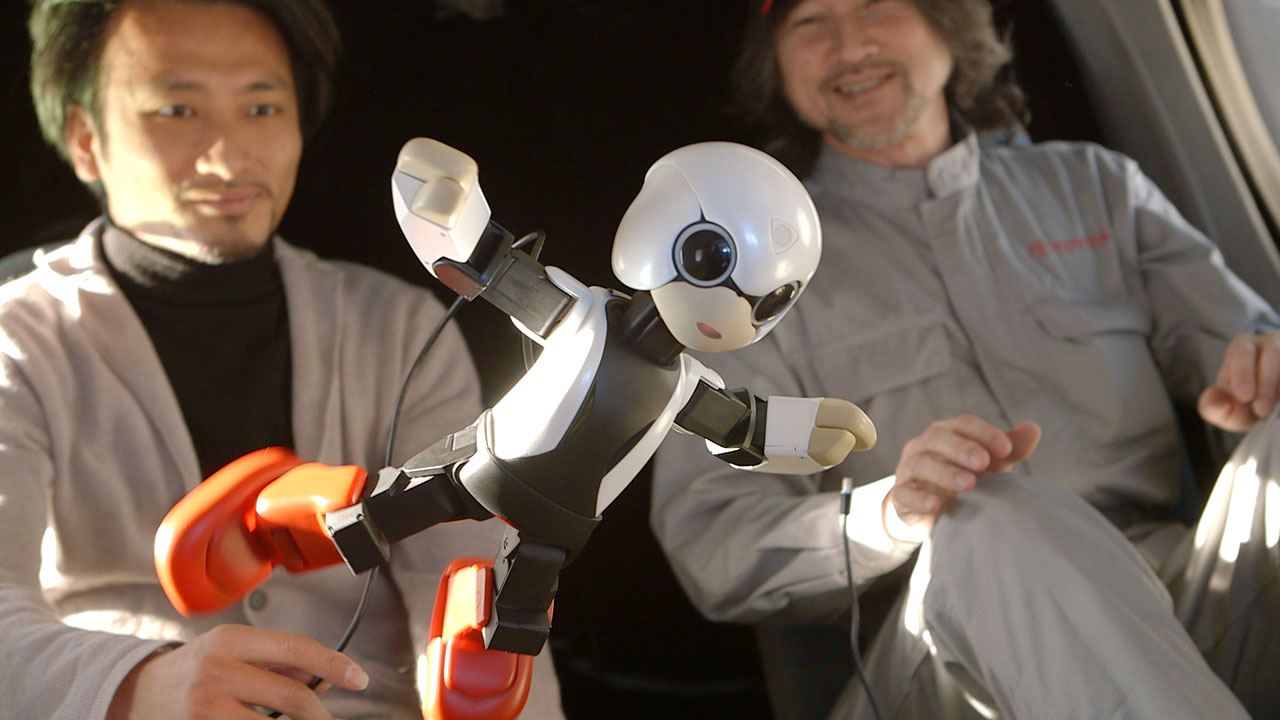
On board the cargo spacecraft is a new robot: Kirobu. The little human-shaped robot is being called a "robot astronaut" and will perform a Japan-to-ISS conversation with astronaut Koichi Wakata, due to come aboard the ISS in November. Kirobu is programmed with voice-and-face-recognition systems. Japan's roboticists hope to learn how to make robot helpers that will accompany astronauts on long space voyage missions.

Kirobu experiences a moment of microgravity on a parabolic jet flight. Credit: Kibo robot project.

This is the fourth mission of the HTV cargo program. The first HTV was launched in 2009. JAXA (Japan Aerospace Exploration Agency) handles rocket launches from its Tanegashima Island Space Center. After the cargo is removed from the HTV-4 over the next couple of months, ISS crew members will eventually fill the container with trash and disposables, undock the module and direct it to burn up over the ocean. Currently, only SpaceX's Dragon cargo spacecraft is capable of returning to Earth with cargo.

JAXA mission control center for HTV launch.

Station POV: Progress 50 undocks from ISS.

Russia has also recently resupplied the ISS. After undocking the Progress 50 robotic cargo ship from the station (which will also burn up over the ocean), astronauts of Expedition 36 began preparations for another supply effort from Russia. The Progress 50 (designated by Russia as Progress M-18M) included a big piece of equipment from the ISS: the TVIS (Treadmill with Vibration Isolation System), which was replaced recently by a new model BD-2 brought aboard by Progress 51 (M-19M), Up until now, every ISS crew has used the treadmill as part of their physical health program. Some of us who have a love-hate relationships with treadmills on Earth might smile at the thought of the treadmill burning up over the Pacific Ocean.

Astronauts Parmitano (L) and Nyberg practice spacecraft docking procedures.


On approach: Progress 52 heads for a docking. ISS POV.

On July 27, the Russian spacecraft Progress 52 (M-20M) blasted off from Baikonur Cosmodrome on a direct-to station orbital path. Instead of the normal multi-day approach, the launch window allowed for a 6-hour short trip to the ISS. With Ground flight control maneuvering the Progress spacecraft, the docking occurred at the Russian-built Pirs Module. On board the cargo, NASA and Russian controllers placed some tools which will be helpful in analyzing what may have gone wrong with astronaut Parmitano's EVA suit earlier this month when water began flowing into the space helmet. 

Crowded parking space at the ISS. HTV is on its way as well.

Front view of Progress 52.

July 16: EVA. Astronaut Cassidy replacing equipment.

Engineers are still working out the glitches that occurred when the water leak began only an hour into the EVA on July 16. If they cannot determine the exact cause on the station, they may have to wait for the next SpaceX Dragon flight so the suit can be sent home to Earth. The urgency to discover the problem's cause  is due to the unknown nature, which could affect other NASA spacesuits that the astronauts depend on. As for astronaut Parmitano, he weathered the incident well and continues his mission challenges very well on the ISS.

Italian Superman: Parmitano flies through Japan's Kibo module entrance in a familiar pose.

Japan's robotic vision: Robot Astronauts as long-duration mission companions? Kirobu is just the start it seems.